1.png)
วช.ถ่ายทอดกลยุทธ์การสอนมวยไทยเพื่อการเจริญเติบโตของเด็กไทย
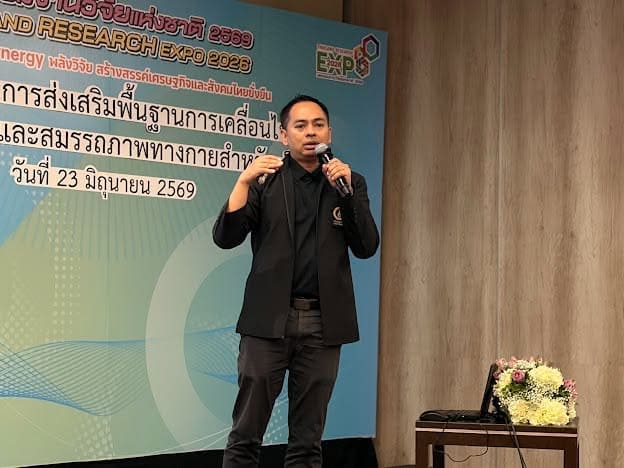
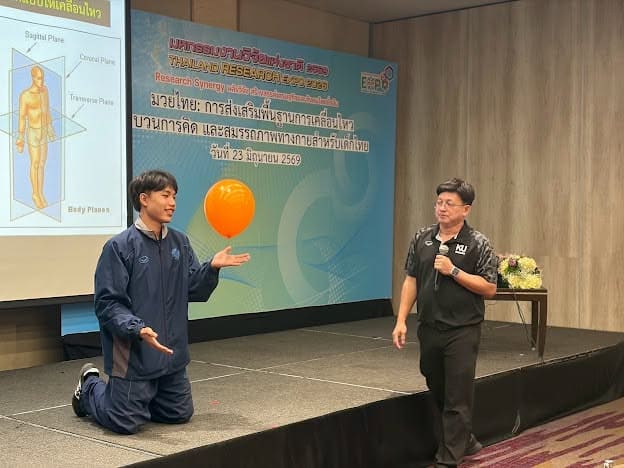
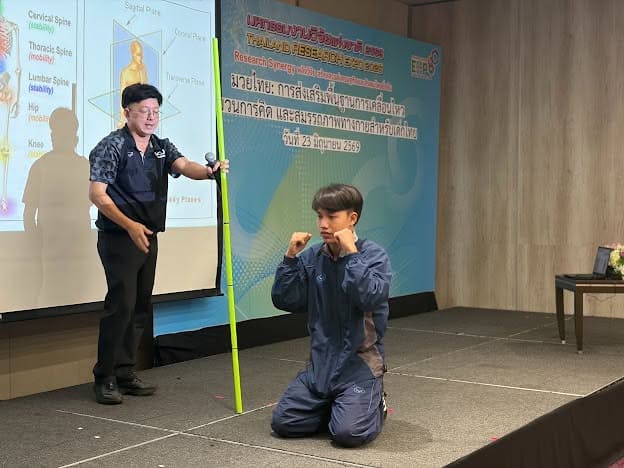
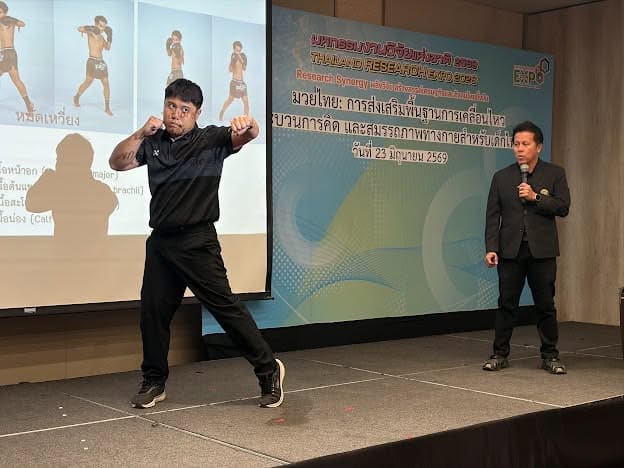
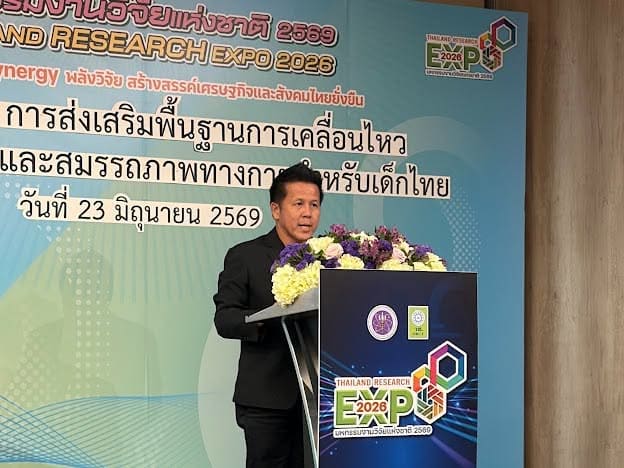
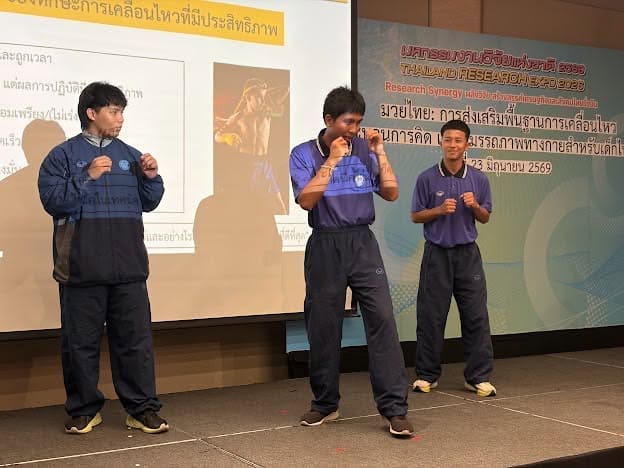
เมื่อวันอังคารที่ 23 มิถุนายน พศ.2569 ศูนย์กลางความรู้ศิลปะมวยไทยสู่ระดับโลก ทุนอุดหนุนการทำกิจกรรมและการวิจัย สำนักงานการวิจัยแห่งชาติ ร่วมกัมหาวิทยาลัยเกษตรศาสตร์ มหาวิทยาลัยมหิดล และเครือข่ายองค์กรมวยไทย จัดอบรมเชิงปฏิบัติการ ในหัวข้อ มวยไทย: การส่งเสริมพื้นฐานการเคลื่อนไหว กระบวนการคิด และสมรรถภาพทางกายสำหรับเด็กไทย ในมหกรรมงานวิจัยแห่งชาติ 2569 “Thailand Research Expo 2026” ณ โรงแรมเซ็นทาราแกรนด์ บางกอก คอนเวนชัน เซ็นเตอร์ แอท เซ็นทรัลเวิลด์ โดยได้รับเกียรติจากรองศาสตราจารย์ ดร.ต่อศักดิ์ แก้วจรัสวิไล จากคณะศึกษาศาสตร์และพัฒนศาสตร์ มหาวิทยาลัยเกษตรศาสตร์ ผู้บริหารจัดการศูนย์กลางความรู้ศิลปะมวยไทยสู่ระดับโลก กล่าวต้อนรับผู้เข้าร่วมกิจกรรมและบรรยายในหัวข้อ “มวยไทยสำหรับเด็กไทย“ โดยกล่าวถึงมิติของมวยไทยในปัจจุบัน ประโยชน์ของการจัดการเรียนการสอนในสถานศึกษา สภาพปัญหาและอุปสรรค รวมทั้งการฝึกปฏิบัติ ทักษะพื้นฐานของมวยไทย การใช้หมัด เท้าเข่า และศอก หลังจากนั้นได้รับเกียรติจากผู้ช่วยศาสตราจารย์ ดร.นิรอมลี มะกาเจ จากคณะวิทยาศาสตร์การกีฬาและสุขภาพ มหาวิทยาลัยเกษตรศาสตร์ กล่าวถึง การฝึกทักษะการเคลื่อนไหว ขั้นพื้นฐานและกระบวนการคิดด้วยมวยไทย ความฉลาดรู้ทางกาย รูปแบบการเคลื่อนไหว ทักษะการเคลื่อนไหวกับการพัฒนาการทำงานของสมอง หลักและขั้นตอนการฝึกทักษะการเคลื่อนไหว รวมทั้งการฝึกปฏิบัติทักษะมวยไทยส่งเสริมการเคลื่อนไหวพื้นฐาน และช่วงสุดท้ายได้รับเกียรติจากผู้ช่วยศาสตราจารย์ ดร.มนต์ชัย โชติดาว จากวิทยาลัยวิทยาศาสตร์และเทคโนโลยีทางการกีฬา มหาวิทยาลัยมหิดล บรรยายถึง มวยไทยกับการพัฒนาทางกาย การเจริญเติบโตและสมรรถภาพทางกายในเด็ก การฝึกมวยไทยให้เหมาะสมกับพัฒนาของเด็กแต่ละช่วงวัย สมรรถภาพทางกายที่สำคัญกับเด็ก และการฝึกมวยไทยที่เหมาะสมกับเด็ก อีกทั้งทางคณะวิทยากรร่วมแลกเปลี่ยนความรู้กับผู้เข้าร่วม ในประเด็นระดับความสามารถของผู้เรียนมวยไทยในระดับต่างๆ มาตรฐานของหลักสูตรมวยไทยในสถานศึกษา ร่างกฎหมายที่เกี่ยวข้องกับมวยไทยสำหรับเด็ก และการประเมินความพร้อมของนักกีฬาก่อนการแข่งขันมวยไทย
เกียรติบัตร https://drive.google.com/drive/u/0/folders/1MQS_HUhpKAkW9Ha0bKhAsYIw9wEe7tQW
NRCT Shares Muay Thai Teaching Strategies to Support the Growth and Development of Thai Children
On Tuesday, 23 June 2026, the Hub of Muay Thai Knowledge to World Class, supported by the National Research Council of Thailand (NRCT) through research and activity grants, in collaboration with Kasetsart University, Mahidol University, and the Muay Thai organizational network, organized a workshop entitled “Muay Thai: Promoting Fundamental Movement Skills, Thinking Processes, and Physical Fitness for Thai Children” during Thailand Research Expo 2026 at Centara Grand & Bangkok Convention Centre at CentralWorld.
The event was honored by the presence of Associate Professor Dr. Torsak Kaewjaratwilai from the Faculty of Education and Development Sciences, Kasetsart University, and Manager of the Hub of Muay Thai Knowledge to World Class, who delivered the welcome address and a lecture on “Muay Thai for Thai Children.” His presentation highlighted the contemporary dimensions of Muay Thai, the benefits of integrating Muay Thai into educational institutions, existing challenges and obstacles, as well as practical training in fundamental Muay Thai skills, including punches, kicks, knees, and elbows.
Following this, Assistant Professor Dr. Niromlee Makaje from the Faculty of Sports Science and Health, Kasetsart University, presented on “Developing Fundamental Movement Skills and Thinking Processes through Muay Thai.” The lecture covered physical literacy, movement patterns, the relationship between movement skills and brain development, principles and procedures for movement-skill training, and practical Muay Thai activities designed to enhance fundamental movement abilities.
In the final session, Assistant Professor Dr. Monchai Chotdao from the College of Sports Science and Technology, Mahidol University, delivered a lecture on “Muay Thai and Physical Development.” The session addressed children’s growth and physical fitness, age-appropriate Muay Thai training, key physical fitness components for children, and suitable Muay Thai training methods for each stage of child development.
In addition, the panel of speakers engaged in a knowledge-sharing discussion with participants on topics such as competency levels of Muay Thai learners, standards for Muay Thai curricula in educational institutions, draft legislation related to Muay Thai for children, and assessments of athletes’ readiness prior to Muay Thai competitions.